1942
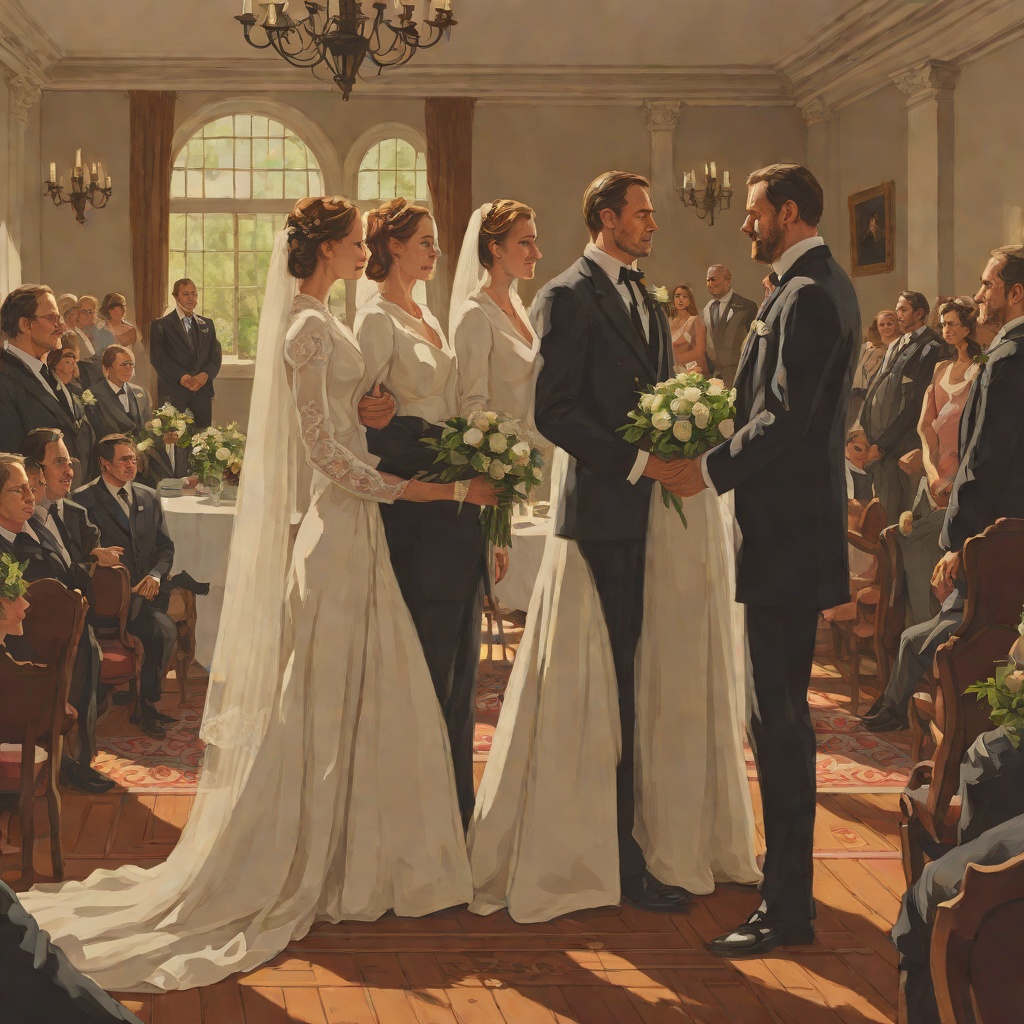
The Executioners1942 is both a precise historical moment and a remembered origin point for the marriage of Sam Bowden and Carol Bowden. Their meeting in that year establishes the intimacy, idealism, and ordinary domestic future that later confront the menace of Max Cady; when the past is recalled, it does not remain safely past, but becomes a measure of what the family stands to lose.
Meeting and Historical Atmosphere
In late April of 1942, Sam met Carol at the Horn and Hardart Cafeteria near the campus of the University of Pennsylvania. Sam was in his final year of law school, while Carol was a senior in the undergraduate school. The scene places their first encounter within a crowded, recognizably ordinary student world, yet the surrounding historical moment gives it an unusual charge. Sam had been working hard, spring was in the air, and the year seemed to carry what the narrative calls a new and reckless flavor.
That recklessness changes the meaning of Sam’s action. Seeing no seats downstairs, he carried his tray upstairs and noticed Carol alone at a table for two, apparently reading a textbook. He was not especially shy, but he was awkward about approaching a girl he did not know. The altered standards of 1942, together with the spring setting and Carol’s attractiveness, made him willing to balance his tray on the corner of her table and ask whether she minded. Their relationship therefore begins not with a grand declaration but with a small breach of ordinary reserve, made possible by a world that felt unsettled and newly permissive.
The Marriage That Follows
The significance of 1942 reaches beyond the meeting itself because Sam and Carol’s later marriage is the domestic structure placed under pressure by Cady. Years afterward, Carol can read Sam’s inward absences with the confidence of fifteen years of marriage. She recognizes when he is physically present but spiritually elsewhere, notices his increasingly severe preoccupation, and refuses to let him conceal danger behind the appearance that everything is fine.
Her resentment at being kept uninformed reveals how the marriage has changed under threat. Sam’s instinct is to protect Carol by withholding information, but she insists that she is neither a child nor a fool and resents being overprotected. The old intimacy, founded in the spontaneous approach of 1942, now has to be remade through disclosure. The past supplies the bond; the crisis tests whether that bond can survive secrecy.
Memory, Fear, and the Family System
The year also functions as a contrast to the later experience of the Bowden family. Sam initially sees himself as the king of his small tribe and believes that he should be able to frighten Cady away, yet he feels physically unequal to the task. Cady appears to possess muscles beyond ordinary naming, while Sam describes himself as an office-type man. The protective role attached to husbandhood and fatherhood therefore becomes a source of inadequacy rather than effortless authority.
The threat does not affect only Sam and Carol. When Sam and Nancy walk back to the boat, he realizes that the children lie within the orbit of the danger. The family’s boundaries have been breached, and decisions that once belonged to the married couple now carry consequences for Jamie, Bucky, and Nancy. Later, when Sam and Carol leave during heavy rain to retrieve the MG, Nancy is grave and conscientious about caring for the younger children. She argues that returning home and asking the police to make a greater effort to find Cady may be unwise, and recommends staying at a hotel in New Essex. The contrast with the open possibility of 1942 is stark: the family must now disperse, conceal intentions, and organize itself around survival.
Recalled Childhood and Adult Trauma
The remembered past is not limited to Sam and Carol’s courtship. Carol recalls being about seven years old at a carnival, when her father paid to make a merry-go-round ride last a very long time. At first the ride was wonderful: she held the brass pole on a large white horse as it rose and fell. Then the faces blurred, the music grew louder, the motion accelerated, and she felt unable to make anyone hear her cries. Her plea that the spinning stop turns a childhood memory into a bodily image of helplessness.
That memory gives form to Carol’s later breakdown. She says that she wants the circling to stop and wants to stop being afraid; Sam responds with helplessness and an intensified awareness of how much he loves her. The image becomes a trauma pattern: danger repeats, control disappears, and the sufferer experiences catastrophe as something that cannot be interrupted. In this sense, 1942’s romantic beginning is set against memories that show how long fear can remain embedded in the body, waiting for a later crisis to reactivate it.
Values Reversed and Recovered
Sam’s recollection of the past also frames his moral crisis. As the siege develops, he forms a resolution that feels alien to his nature because it would reverse the values by which he has lived. His changed manner makes him moody and absentminded, and Carol watches him speculatively. The ordinary man formed by marriage, law, mortgage, family, and an insurance program must contemplate a course of action outside the orderly identity associated with his professional life.
Yet the aftermath does not leave him merely corrupted. Sam later describes the world as fresh and new, as though he were recovering from a serious illness. He feels enormously alive and does not want that intensity to fade. He recognizes that he had been idealizing his profession and leaning on it too heavily; law is a tool, not a complete moral shelter, and when it cannot help, another useful course of action must be taken. Against that altered understanding, 1942 represents the earlier foundation of his life: the year when love entered through an improvised cafeteria gesture, before violence forced him to reconsider what protection, family, and morality require.